5. November 2025
DADDY:ISSUES – FATHER:COMPLEX
This is not a tribute.
This is not therapy.
This is a posthumous dialogue.
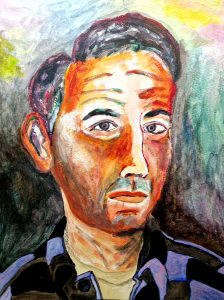
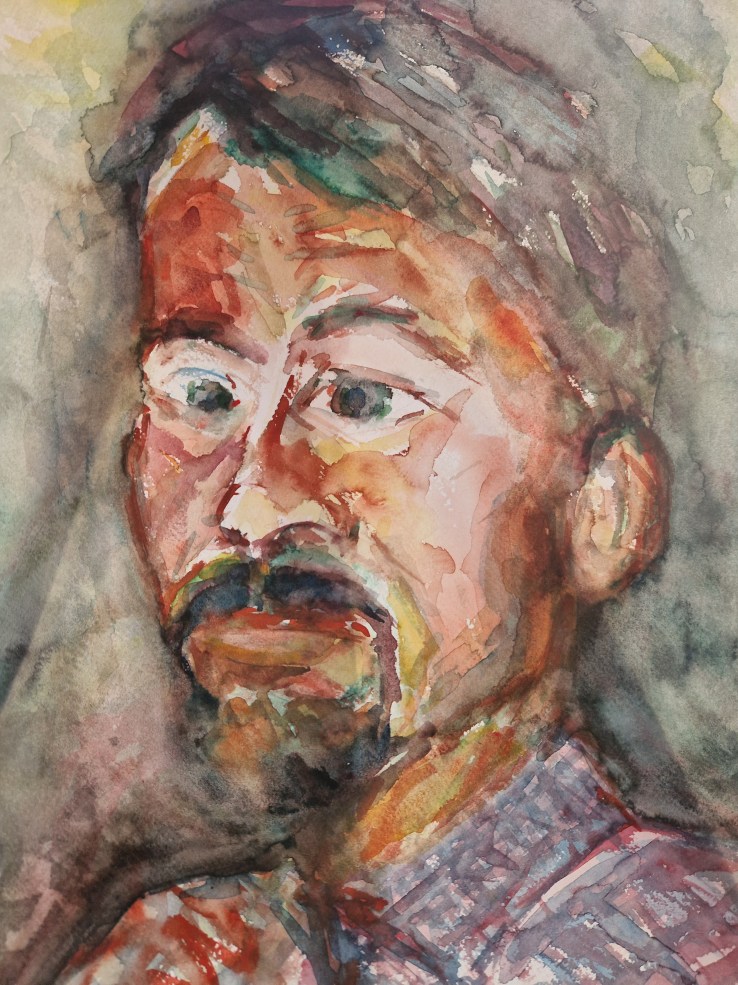
Since 2023, I have been engaged in a posthumous dialogue with my late father—a portrait painter who kept much of his work private, even hidden. A decade after his death, I am allowing his figures to resurface, not as mere memories, but as unresolved questions.
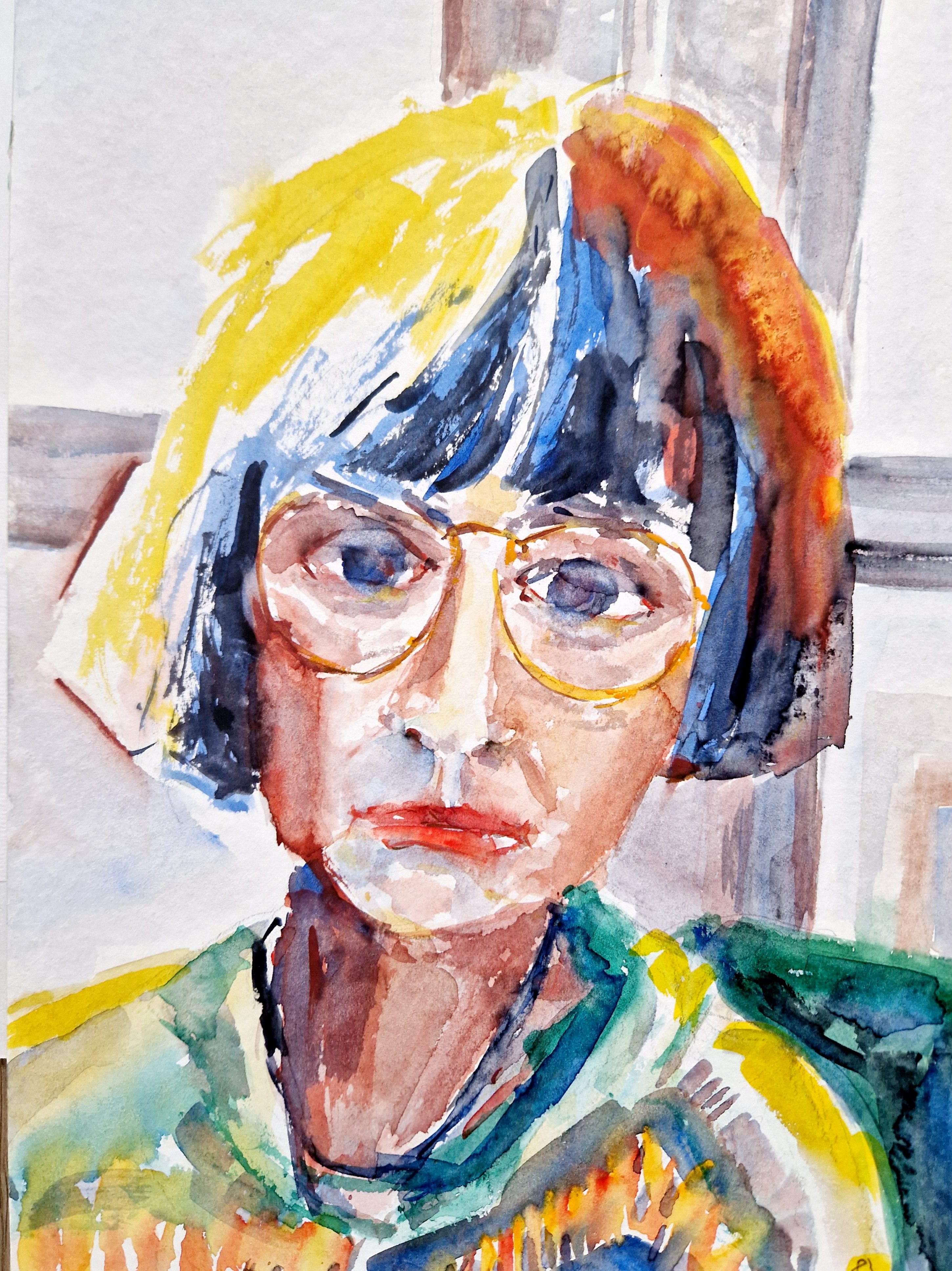
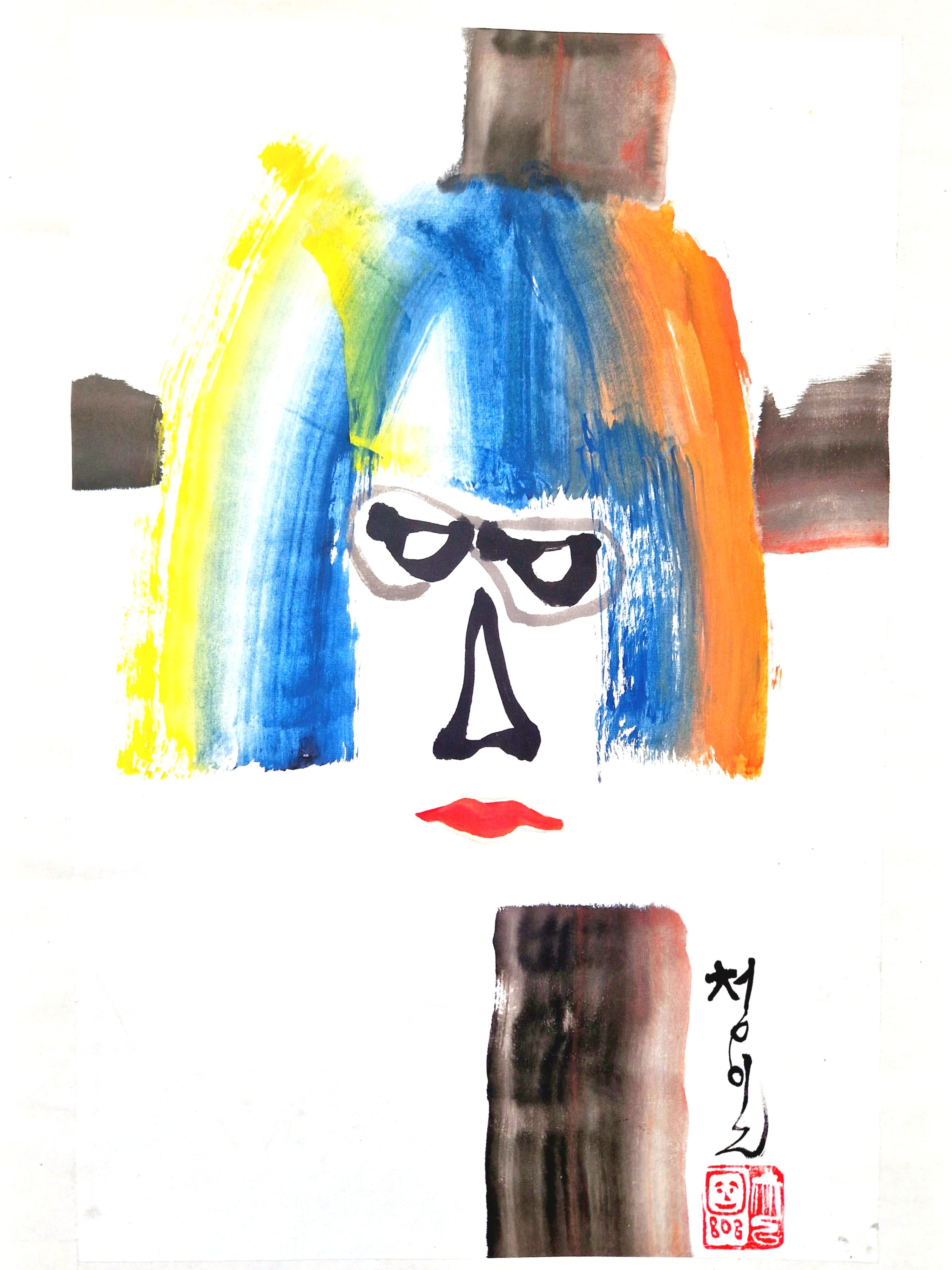
The imaginary exhibition juxtaposes my father’s original portraits with my reinterpretations: remixed and re-inked. What began as an inheritance evolves into an act of artistic appropriation. The father’s gaze rematerializes; the son redraws bodies and faces. Ink becomes blood, and the line between homage and rebellion blurs.
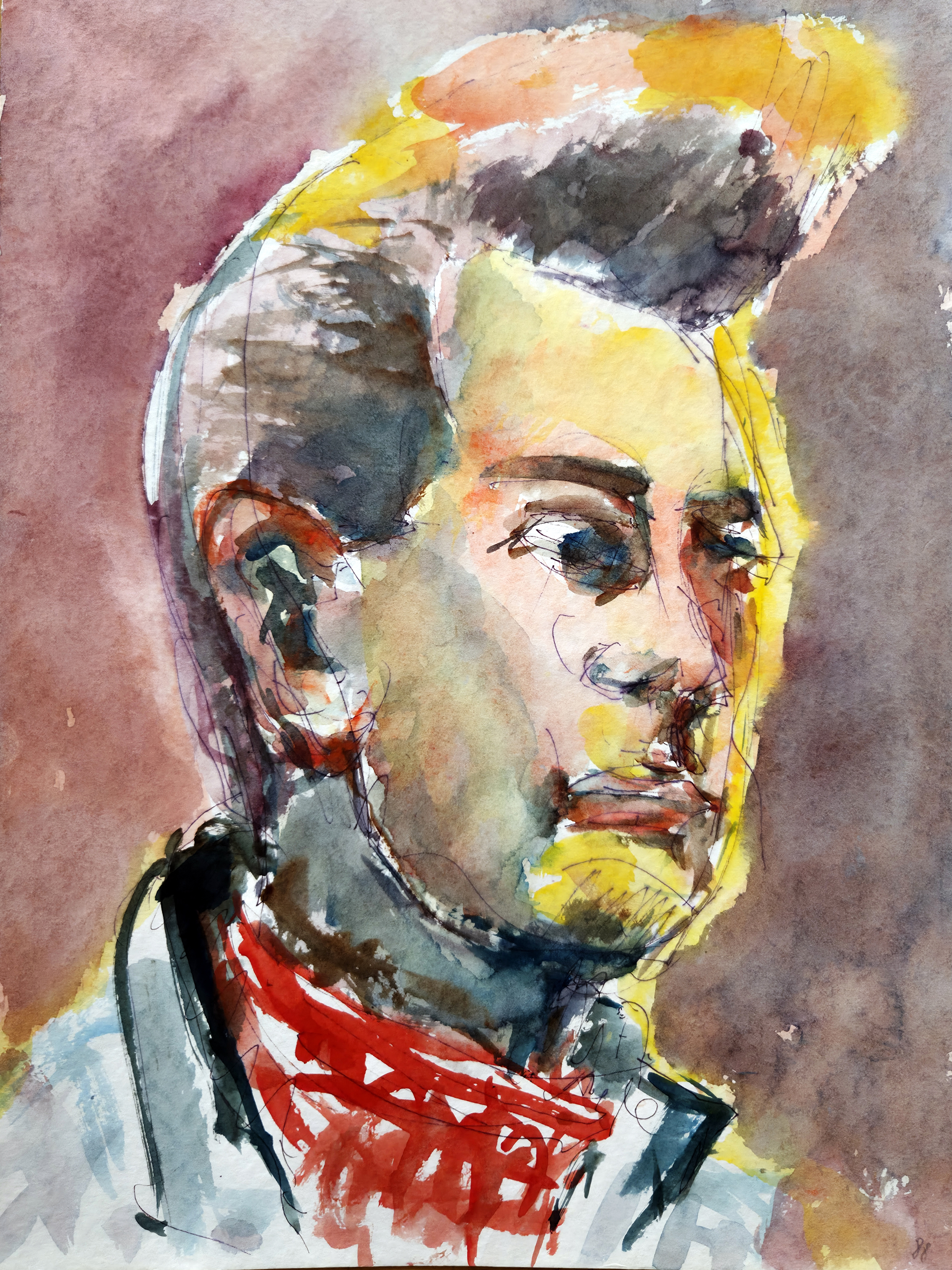
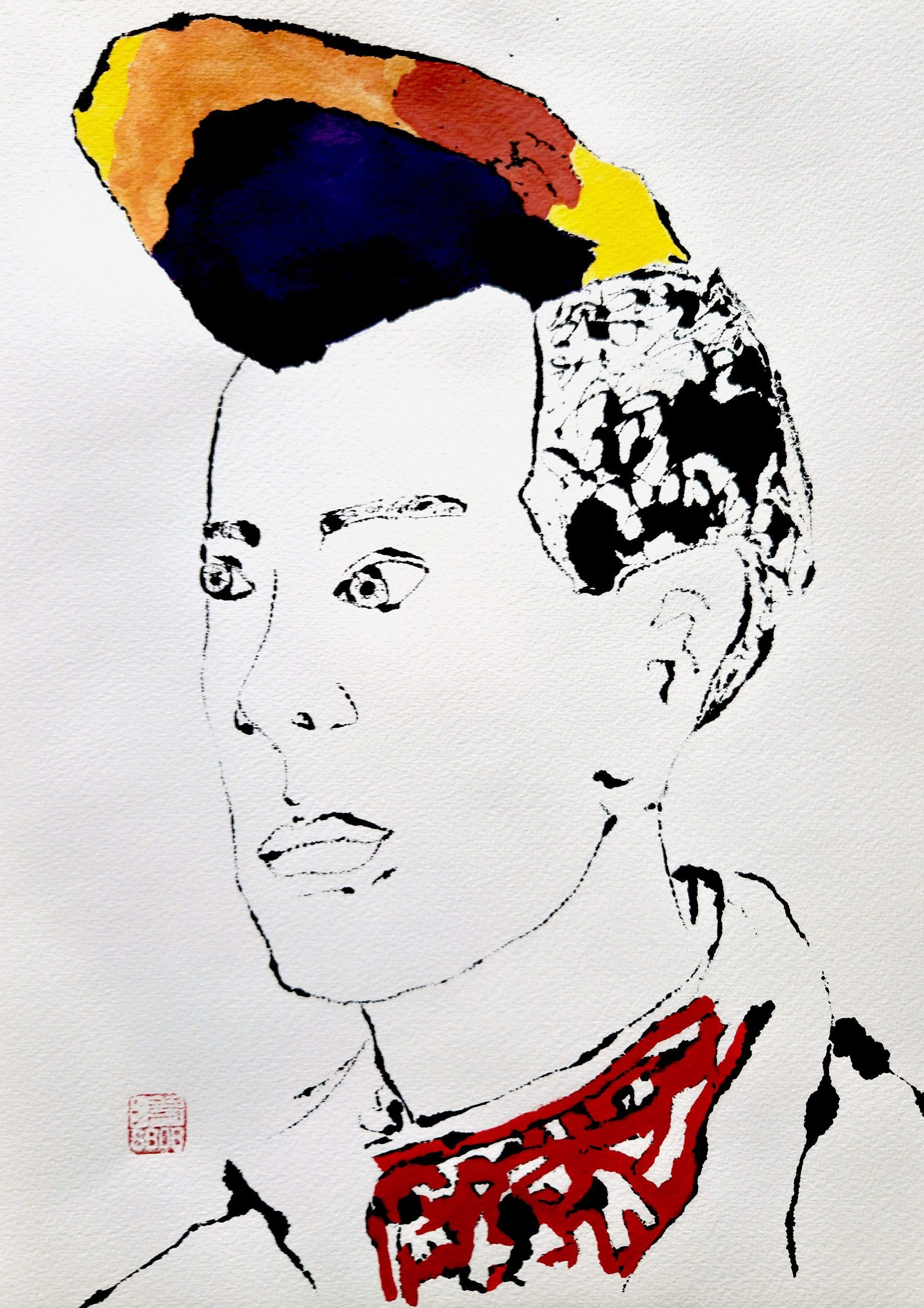
The exhibition’s three walls—one for the father’s hidden images, one for direct dialogue, and one for my artistic response—allow visitors to experience this journey firsthand. In public spaces, the hidden finally gains its publicity. Images that have never seen the light of day are now in focus – as a starting point for artistic exploration.
27. Juli 2023
ARE YOU THINKING ABOUT USING YOUR TIME WISELY?
22. August 2022
THE FOUR TREASURES OF THE SCHOLAR’S ROOM
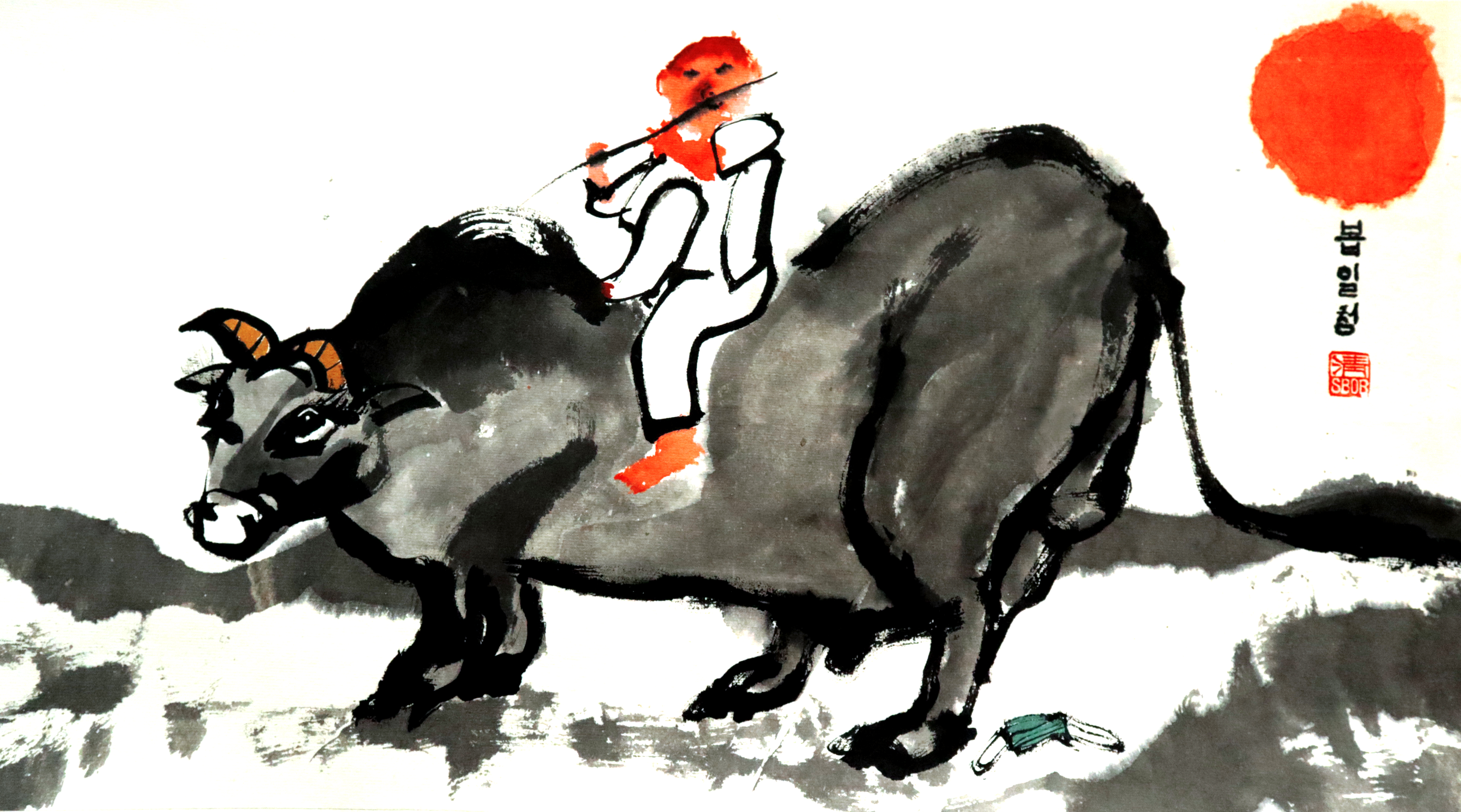
Brush, ink, rubbing stone and paper: calligraphy artists use these four tools to create their works. Their aim is always to understand the things depicted from the inside out and to be moved by them. Whether it is depictions of plants, animals and landscapes or fine written works of art: the one in all and the all in one is always sought.
In the 17th century, the Chinese painter monk Bittermelon wrote a groundbreaking treatise on painting under his artist name Shitao (stone wave). In it he dealt in detail with the properties of ink and brush. He wrote that images always lack the heavenly impact when the artist fails to practice pure serenity and master the lively life force in the interaction of ink and brush.
Contemplation and concentration are the two desirable states of mind that should flow into the artist’s empty wrist in order to guide the brush, as it were, dancing across the paper. The aim is to create an image that touches and moves the viewer. The painting students emulate their master.
Nature is the most important motif in ink painting. Everyday things from people’s surroundings are depicted: landscapes, animals, stones and, again and again, plants. The bamboo, the plum blossom, the orchid and the chrysanthemum: these four have already been painted in countless variations. In the Far Eastern countries they symbolize the four seasons. The artists repeatedly try to capture and characterize the essence of these plants with sober directness with just a few brush strokes. But the empty background also has its place in the ink paintings. In the tension between painted and unpainted surfaces, between light and dark, between emptiness and fullness, an attempt is made to eliminate all ingredients that distract from the core of the artistic statement.
The calligraphies also develop their effectiveness from this contrast. The simplicity and symmetry of the characters on the blank paper allow the viewer to calm down – regardless of whether he understands the meaning of the characters or not.
Pinsel, Tusche, Reibstein und Papier: Mit diesen vier Werkzeugen gestalten die Kalligrafiekünstler ihre Werke. Dabei geht es ihnen immer darum, die dargestellten Dinge von innen heraus zu verstehen und sich von Ihnen ergreifen zu lassen. Ob es sich um Darstellungen von Pflanzen, Tieren und Landschaften handelt oder um edle Schriftkunstwerke: immer wird das Eine in Allem und das All in Einem gesucht.
Im 17.Jahrhundert verfasste der chinesische Malermönch Bittermelone unter seinem Künstlernamen Shitao (Steinwoge) eine wegweisende Abhandlung zur Malerei. Darin beschäftigte er sich eingehend mit den Eigenschaften von Tusche und Pinsel. Er schrieb, dass Bildern immer dann die himmlische Wirkungskraft fehlt, wenn der Künstler es versäumt beim Zusammenspiel von Tusche und Pinsel die reine Gelassenheit zu üben und die rege Lebenskraft zu meistern.
Kontemplation und Konzentration sind die beiden erstrebenswerten Geisteszustände, die in das leere Handgelenk des Künstlers fließen sollen, um den Pinsel gleichsam tanzend über das Papier zu führen. Auf diese Weise soll ein Bild zu geschaffen werden, das den Betrachter berührt und bewegt. Die Malschüler eifern dabei ihrem Meister nach.
Die Natur ist das wichtigste Motiv in der Tuschmalerei. Dargestellt wird Alltägliches aus dem Umfeld der Menschen: Landschaften, Tiere, Steine und immer wieder Pflanzen. Der Bambus, die Pflaumenblüte, die Orchidee und die Chrysantheme: in unzähligen Varianten wurden diese Vier schon gemalt. In den fernöstlichen Ländern stehen sie symbolhaft für die vier Jahreszeiten. Immer wieder versuchen die Künstler in nüchterner Direktheit das Wesentliche dieser Pflanzen mit wenigen Pinselstrichen zu erfassen und zu charakterisieren. Doch auch der leere Bildgrund hat seinen Platz auf den Tuschmalereien. Im Spannungsfeld von bemalter und unbemalter Fläche, von Hell und Dunkel, von Leerheit und Fülle wird der Versuch unternommen, alle vom Kern der künstlerischen Aussage ablenkenden Zutaten zu eliminieren.
Auch die Kaligraphien entfalten ihre Wirkungskraft aus diesem Kontrast heraus. Die Schlichtheit und Symmetrie der Schriftzeichen auf dem leeren Papier lassen den Betrachter zur Ruhe kommen – ganz gleich ob er die Bedeutung der Zeichen versteht oder nicht.
25. Januar 2021
HOW TO WRITE A MODERN CALLIGRAPHY
This is a video about me, writing my calligraphy Where?How?What?Way. at my workroom in Berlin. Many Questions and confusion in Europe at the end of the year 2020. Our continent is divided by injustice, ignorance, selfishness and frozen in a seemingly endless lockdown.
2020 ends with huge question marks for all of us. What will our future look like after COVID19, Brexit and right-wing populism? I want a democratic Europe of inclusion, green prosperity for everybody, justice and solidarity. I crumpled the paper, the questions are pressing, but the way will be found. That is my goal for 2021.
13. Dezember 2020
PORTRAITS OF BODHIDHARMA
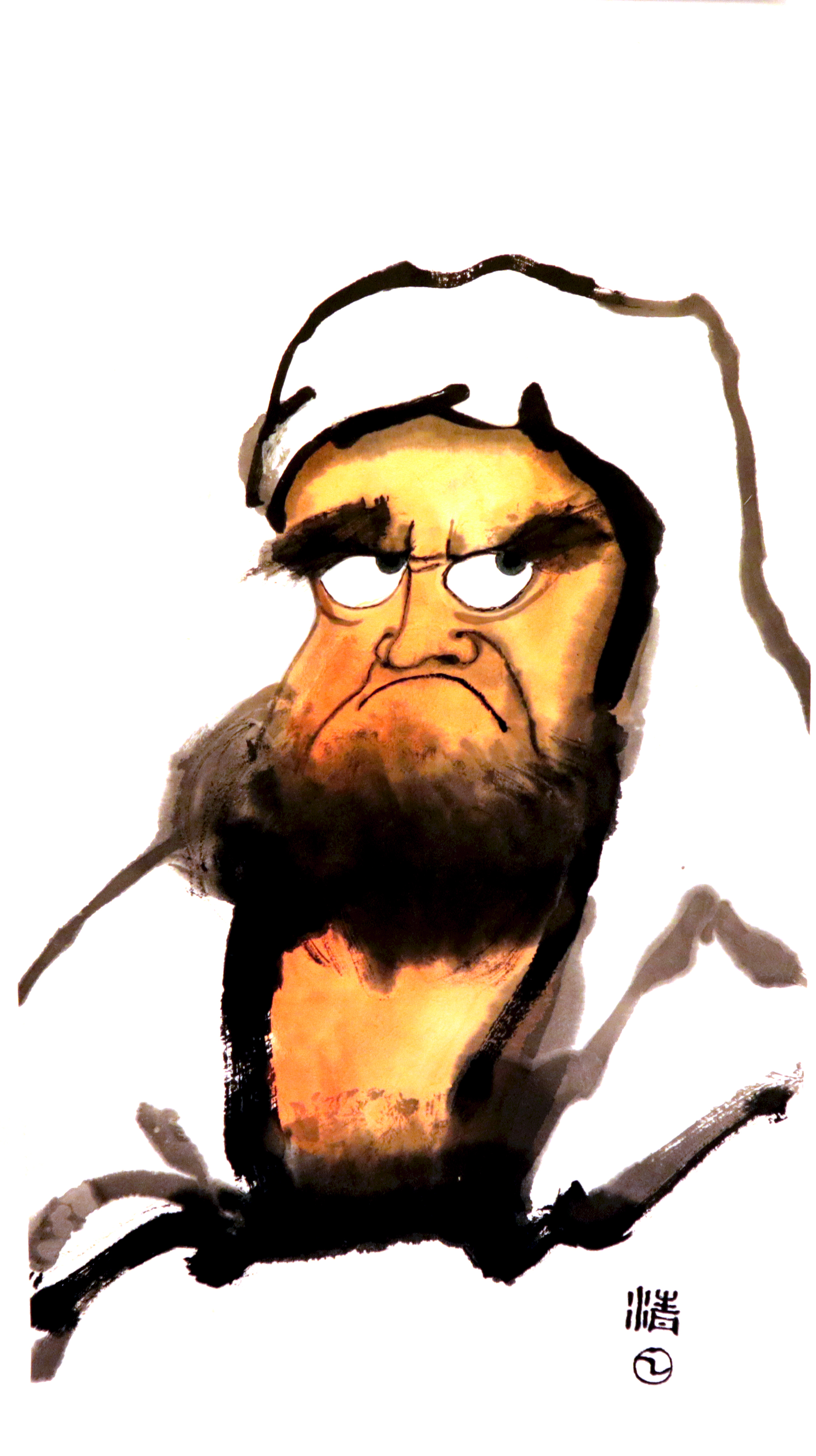
Bodhidharma was a semi-legendary Buddhist monk who lived during the 5th or 6th century. He is traditionally credited as the transmitter of Chan (Zen) Buddhism to China, and regarded as its first Chinese patriach. According to Chinese legend, he also began the physical training of the monks of Shaolin monastery that led to the creation of kungfu. Throughout Buddhist art, Bodhidharma is depicted as an ill-tempered, bearded, wide-eyed non-chinese person. Several stories about Bodhidharma have become popular legends in zen tradition: After being refused entry at the Shaolin monastery, he lived in a nearby cave, where he faced a wall for nine years, not speaking for the entire time. He is said to have fallen asleep in the seventh year during his nine years of wall-gazing. Becoming angry with himself, he cut off his eyelids to prevent them from closing again. (that is why Bodhidharma is always depicted without eyelids) According to this legend, as his eyelids hit the floor the first two tea plants in China sprang up. Thereafter tea would remain as the favourite stimulant to keep students of Chan awake during zazen meditation.
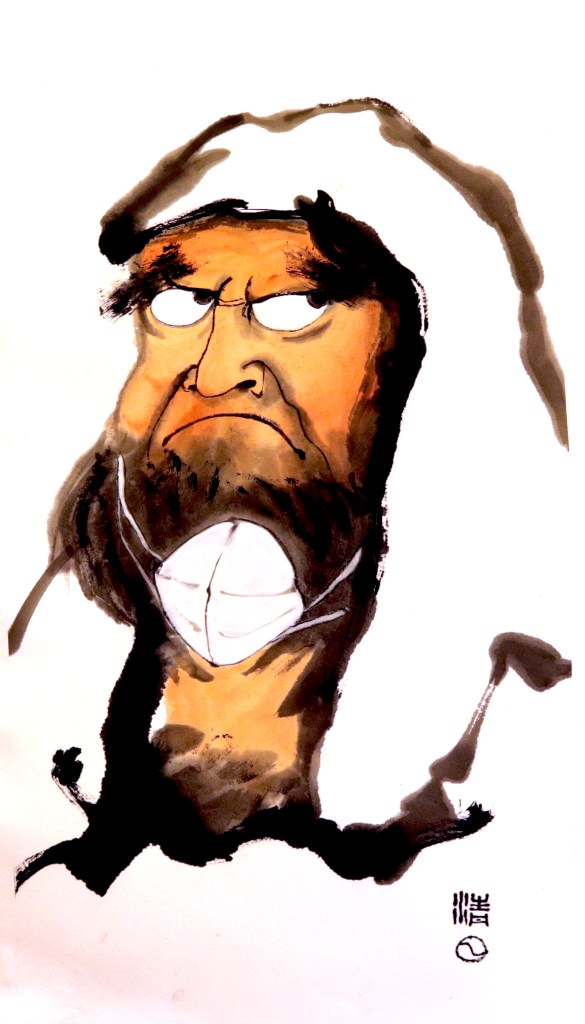
How would Bodhidharma react to todays omnipresent facemasks and the regulations behind them? As an unconventional eccentric and free spirit in his time, he would maybe have questions. During his lifetime it is highly probable, that he was the one who invented Buddhist tradition of insightful awakening outside of the scriptures, regardless of word and letter.
In my portrait I see Bodhidharma on his road to acceptance and future acts full of mindfulness and compassion. A part of our mind resists fairly and reasonable actions and defends against external control. Selfillusion bewails the loss of alleged freedom. When we calm down, become clear and accept what is not changeable right now, it will renew our expression. In a short time the facemask could cover mouth and nose of the angry Bodhidharma.
17. November 2020
DIE RATTE GEWINNT
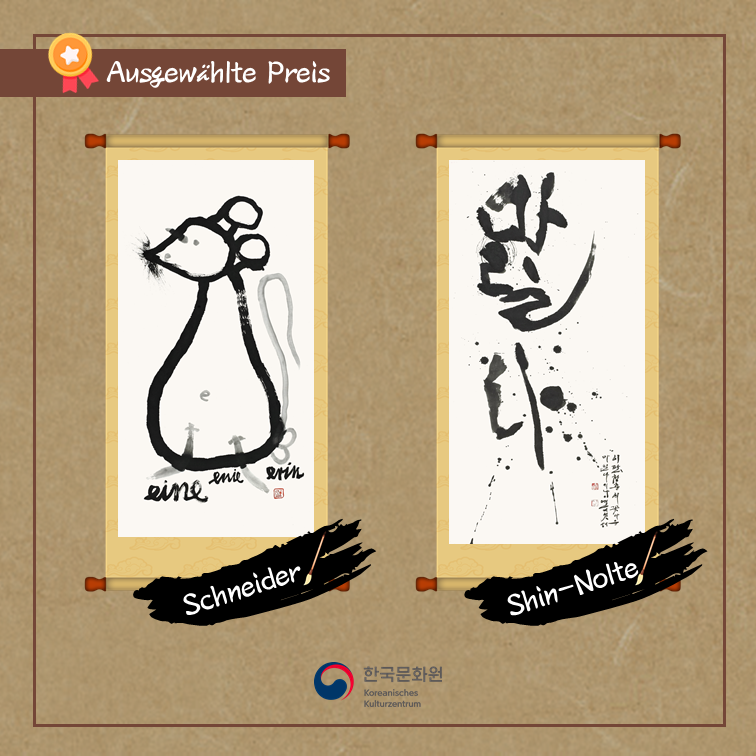
Zur 32. Grand Calligraphy Exhibition of Korea, die in Korea stattfand, gehörte auch ein deutsches Team mit ihrem großartigen Werk dazu, dank dem insgesamt 8 Personen den Aufstieg in die Siegerliste schafften! Ich freue mich sehr, dass ich dabei sein konnte. Ich danke der Korean Calligraphy Association für die erfolgreiche Druchführung des Wettbewerbs und meinem Lehrer Byong-Oh-Sunim für die Inspiration. Meine Kalligrafie Die Ratte – eine Genießerin, die ich zum aktuellen Jahr der Ratte anfertigte, wurde von der Jury mit einem Preis bedacht.
20. August 2020
HOCKNEY
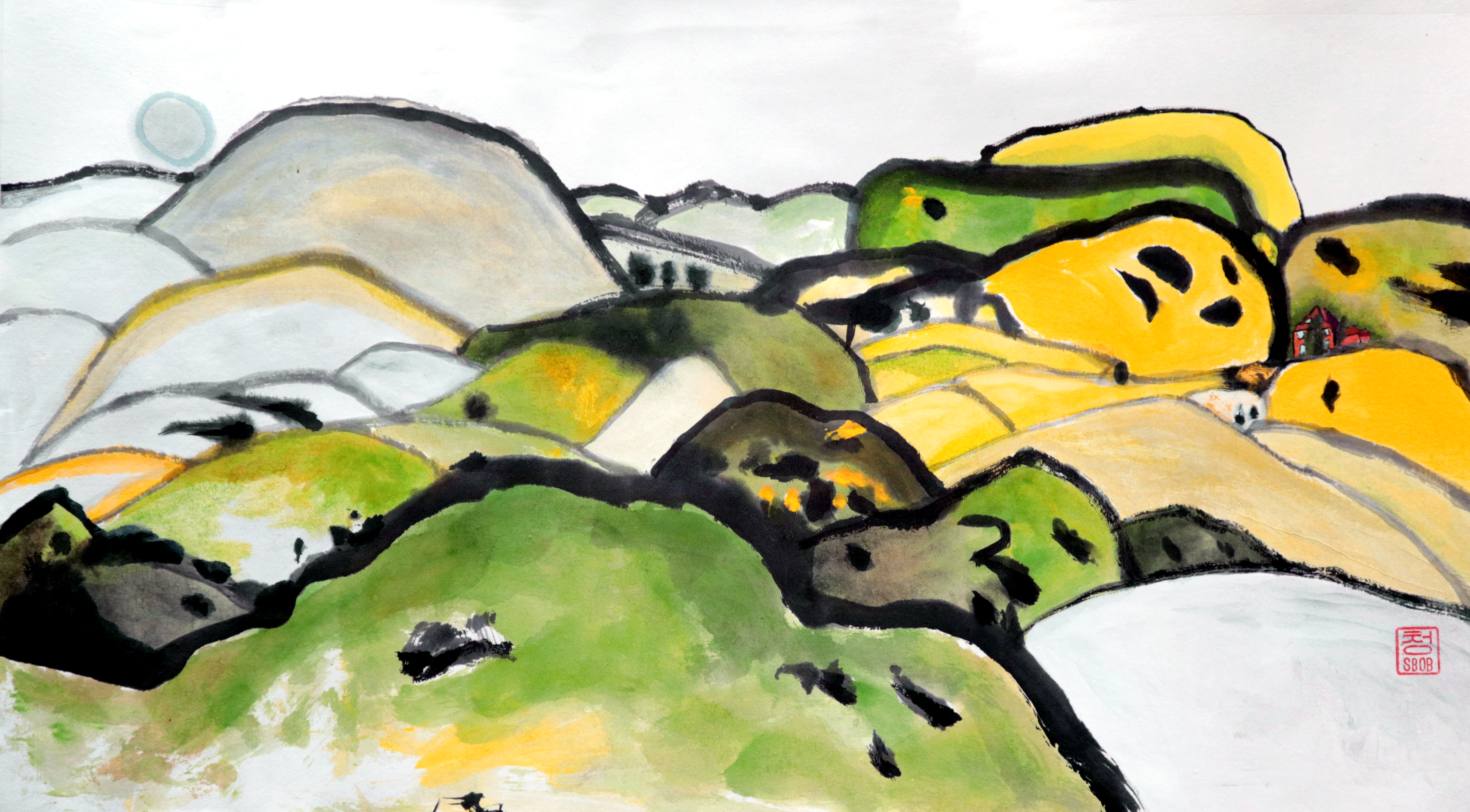
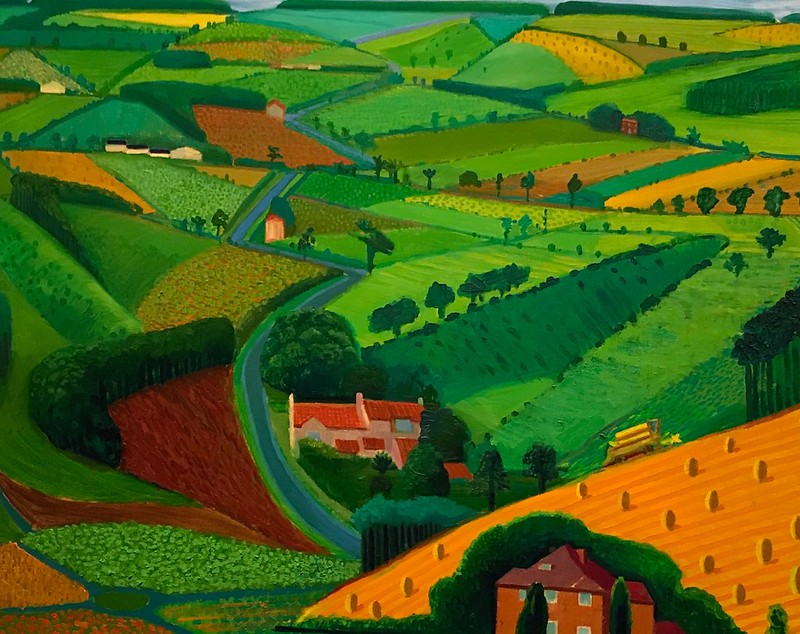
An Hockneys Yorkshire-Landschaftsmalerei bin ich durch einen traurigen Zufall geraten. Mir fiel vor drei Jahren die schwierige Aufgabe zu, die Wohnung meiner verstorbenen Tante in Heidelberg aufzulösen. Ihre Wohnungseinrichtung atmete den Geist von hochwertigem Design der Siebziger Jahre. Über der ockerfarben De Sede Sitzlandschaft aus Leder prangte ein weiß gerahmtes Gemälde, das eine sanft-hüglige Landschaft zeigte. Durch die flächig-knallbunten Felder und Äcker dieser Landschaft schlängelte sich eine schmale Straße bis zum Horizont.
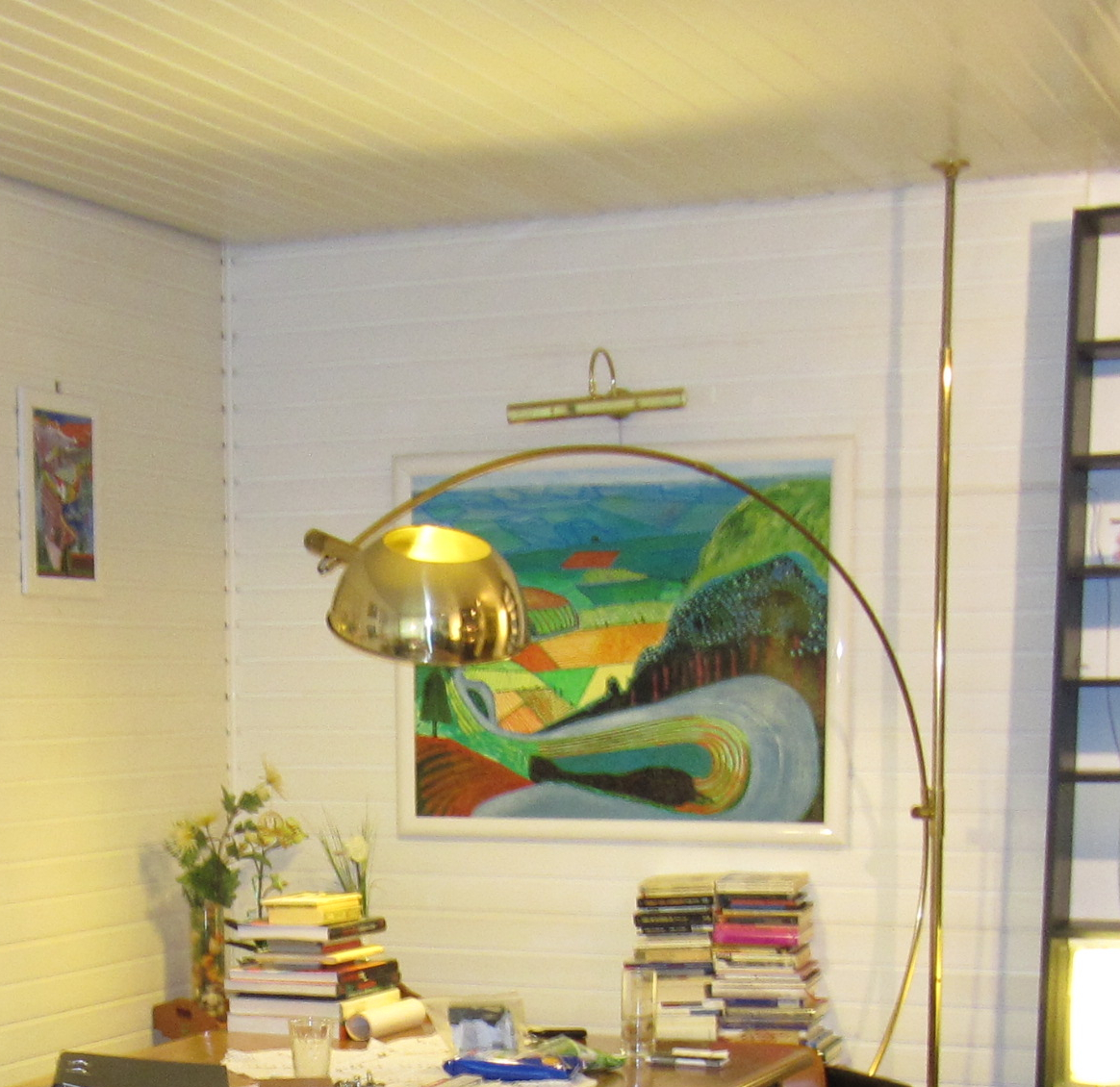
Das Bild strahlte für mich eine nostalgische Leichtigkeit aus. Der Frieden der Landschaft lud mich ein aufzubrechen zu einer beschwingten Wanderung Richtung Horizont. Keine Signatur, keinerlei Hinweis auf den Künstler. Später, auf der Zugfahrt zurück nach Berlin, blätterte ich beiläufig im zerlesenen Deutsche Bahn Magazin. Ein Bericht über die große David Hockney Retrospektive in der Londoner Tate Gallery. Und plötzlich: Eine Fotografie, genau von dem Bild, das im Appartement meiner Tante über dem Sofa hing! Ein wertvolles Kunstwerk, unbewacht, unverglast, beleuchtet von Punktstrahlern, die an gespannten Drähten von der Handschuhsheimer Zimmerdecke hingen. Gleichzeitig war das Gemälde aber in der Tate Gallery. Welches von beiden war nun eine geniale Fälschung? Mir ist bis heute der Gedanke lieber, es handelt sich bei meinem geerbten Gemälde um eine frühe Fassung des Meisterwerks. Die Seelenverwandtschaft mit meiner Tante war auf jeden Fall bewiesen: Sie hatte mir ein Bild meines Idols David Hockney vererbt.